

Learning happens in our bodies: a case for embodied education
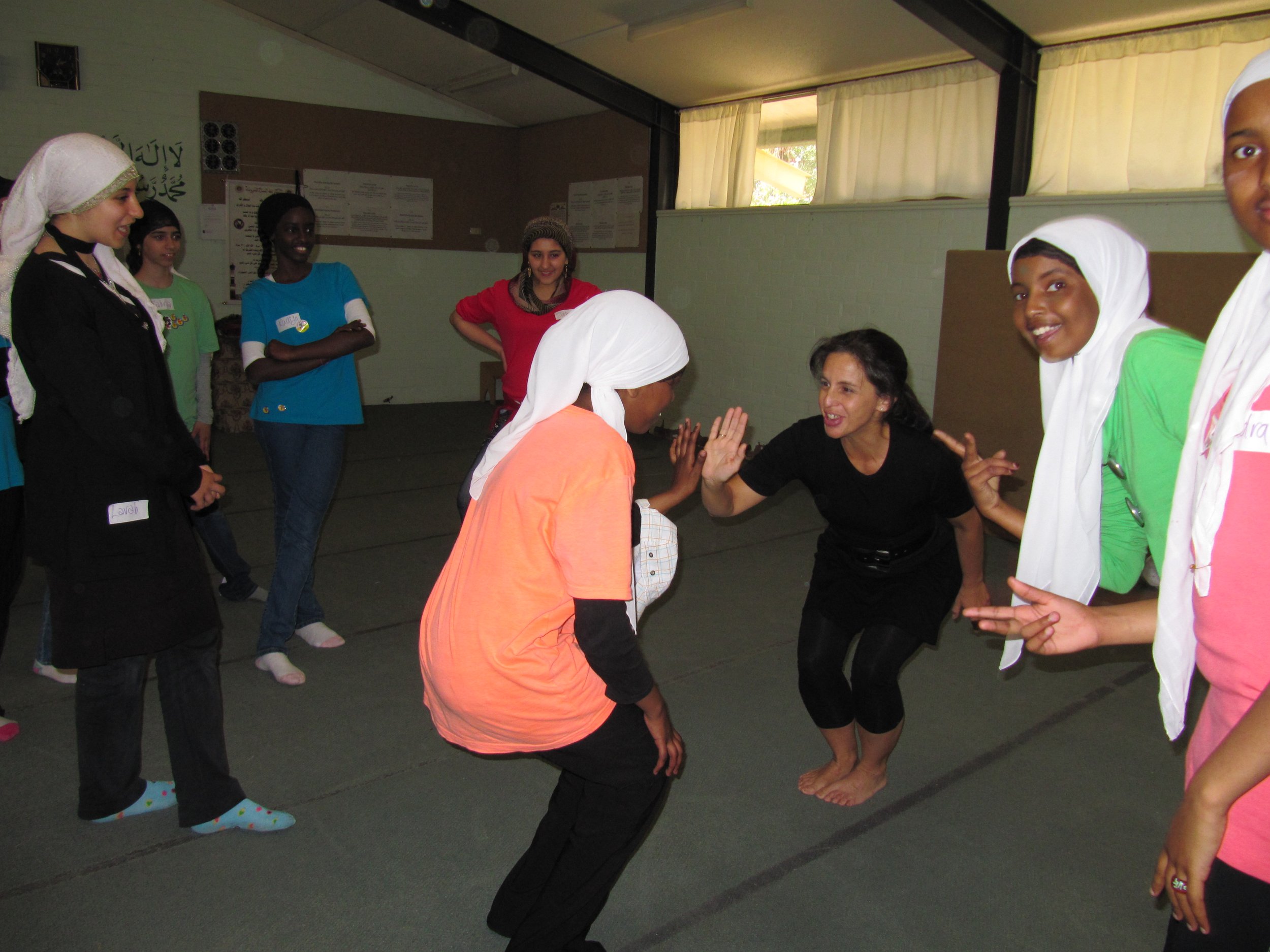
Picture this: A student struggling to grasp a complex physics concept suddenly "gets it" after physically acting out the motion with their body. A child learning a foreign language remembers vocabulary three times better when they gesture the words instead of just repeating them. A mathematics class where students walk through number patterns instead of sitting at desks—and their test scores improve.
These aren't outlier stories.
They're examples of embodied learning in action, and the research is clear: it's time we stopped treating the body and mind as separate entities in education.
What is embodied learning?
Despite evidence against the contrary, education continues to operate on a flawed assumption that thinking happens only in the brain, while the body carries it around the classroom.
Embodied learning challenges this outdated view, still visible in policy.
It recognizes that cognition is deeply rooted in our physical experiences, bodily movements, and interactions with our environment.
Think about learning to ride a bike.
No amount of reading about balance and momentum could replace the physical experience of doing it. Your muscles, your sense of spatial awareness, your body's adjustment to wobbles—all are essential to learning.
That's embodied cognition at work.
What makes this approach particularly powerful is that it changes not just what students learn, but how they see themselves as learners. When students use their whole bodies in learning, they often undergo what education researchers describe as a shift in their fundamental understanding, a transformation in how they make sense of the world around them.
The 4E framework: a not so new way of understanding learning
The 4E framework challenges traditional ways of approaching cognition and proposes that cognition is:
1. Embodied because our physical body actively shapes how we think and understand. When we learn balance on a bicycle or when a gymnast experiences spatial disorientation (the "twisties"), we're using the body as a thinking tool. Movement isn't separate from thought, it is thought in action.
2. Embedded because cognition happens within contexts. When you arrange ingredients in order while cooking, you're using your surroundings to help your memory and thinking. Learning rooted in actual places and situations becomes more meaningful and memorable than abstract instruction delivered in isolation.
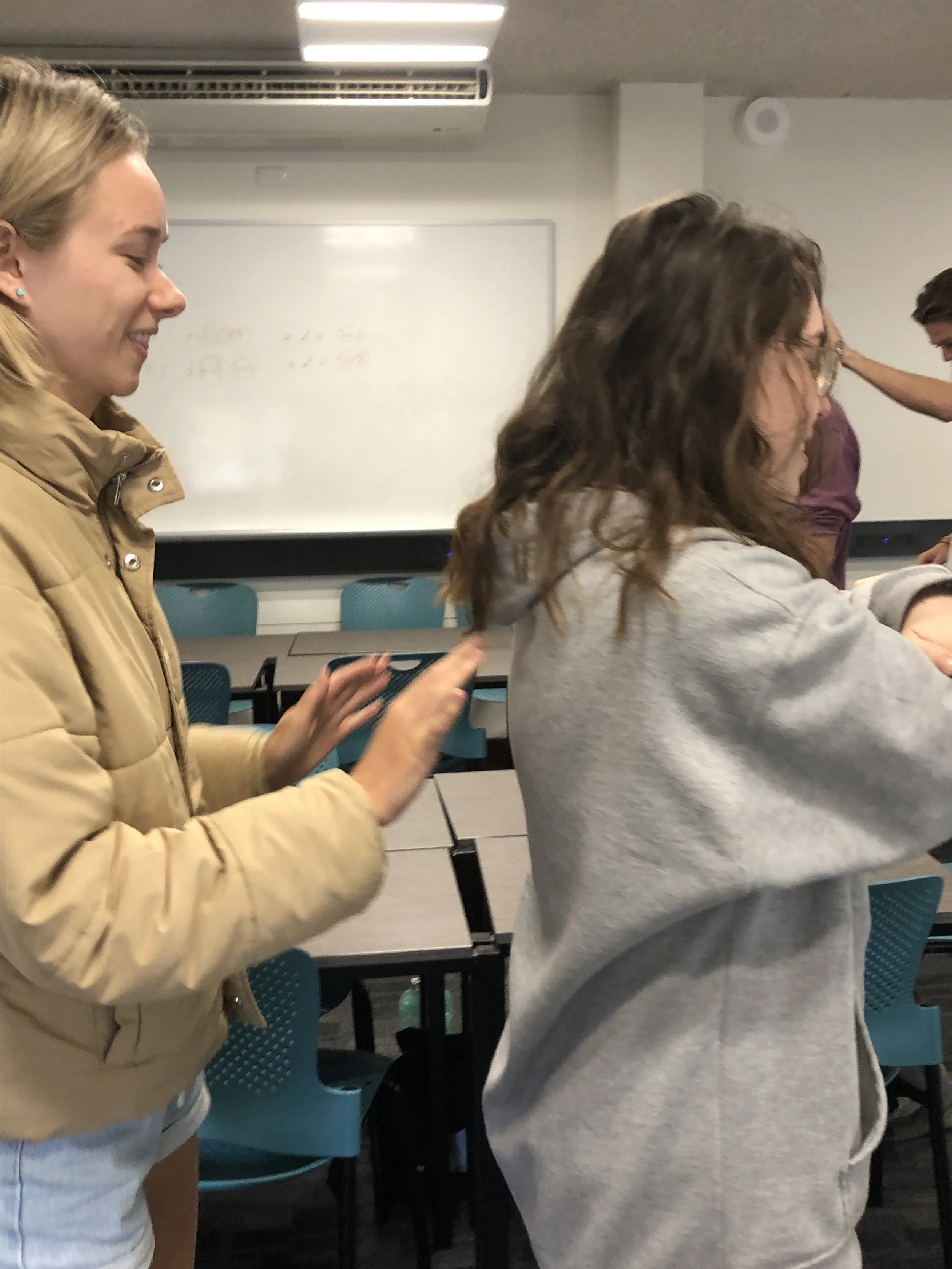
3. Enactive because we understand the world through action and interaction. Music students who clap and move to rhythms before learning notation develop a richer, more physically grounded understanding of tempo.
Knowledge emerges from doing, not just from being shown or told.
4. Extended because our minds extend beyond our bodies to include the tools we use. When we set up reminders for friends’ birthdays on our phone calendar and rely on it, that device becomes part of our memory system.
Learning happens through networks of people and tools working together.
This framework isn't abstract theory, it has profound implications for how we teach and learn. It suggests that the traditional model of students sitting (mostly) still, (mostly) listening passively, and (mostly) absorbing information is fundamentally at odds with how humans actually learn.
Moving beyond the mind-body split
The Western educational tradition has long treated intellectual learning and physical education as separate domains. This division perpetuates what philosophers call the "mind-body dichotomy" - the false assumption that thinking and doing are fundamentally different activities.
But embodied learning research reveals that this separation is artificial and harmful.
Consider what happens in traditional classrooms: students' bodies must be controlled, restricted, and essentially made invisible. Children are expected to sit still, raise their hands, move only when permitted.
The message sent is that the body is a distraction from real learning. But what if the opposite is true?
What if the body is essential to learning, not peripheral to it?
Research from innovative educational reform movements has demonstrated that when teachers give children freedom to express themselves through movement, explore their environments directly, and learn through bodily experience, something remarkable happens. Students don't just learn the content better—they develop creativity, independence, and genuine engagement with learning itself.
Everyday thinking: more embodied than we realise
Consider two everyday activities that reveal how embodied our thinking is:
Cooking a meal: This isn't just about following recipe steps. It involves juggling menu planning, dietary needs, flavour combinations, time management, and coordinating multiple dishes. Thinking reaches far beyond the individual tasks of chopping or boiling. Thinking is engaged in complex decision-making and problem-solving while the hands work and the senses stay alert.
Writing an essay: Yes, it involves putting words on paper, but also simultaneously choosing topics, gathering sources, structuring thoughts logically, building arguments, and critically examining evidence. This process shows that thinking involves a wide range of activities beyond just the mechanical skill of writing, it's about weaving information together and constructing coherent arguments.
These examples show that thinking is multifaceted and cannot be reduced to isolated sub-skills. It's a holistic process that engages body, mind, and environment.
Yet our schools often fragment this natural integration, treating each component as separate and teachable in isolation.
The science behind the movement
Recent research reveals that when students physically engage with learning content, they don't just remember it better, they understand it more deeply.
Studies show that children who act out story sequences demonstrate superior reading comprehension.
Students who use gestures while learning mathematics retain concepts longer than those who sit passively.
Even something as simple as tracing geometric shapes with a finger on a tablet improves spatial learning.
Why does this happen?
Our brains reuse the same neural structures for both physical action and mental processing. When you physically enact a concept, you're creating multiple pathways to that knowledge, making it ‘stickier’, more accessible, and easier to apply in new situations.
The metaphors we use to understand abstract concepts are themselves rooted in bodily experience. When we talk about "grasping" an idea or feeling "moved" by an argument, we're revealing how thought itself is grounded in physical experience.
Five Critical Advantages of the 4E Approach
When we shift from traditional brain-centred teaching to a 4E approach, we gain several important benefits:
1. Learning is grounded in reality: rather than treating thinking as an abstract, isolated skill that exists independently of context, the 4E framework reminds us that learning is always active, context-dependent, and connected to real experiences. This prevents us from oversimplifying what it means to "think critically" or "solve problems."
2. Makes sense of why skills don't always transfer: since skills develop through specific physical, social, and environmental interactions, they don't automatically move from one setting to another. Understanding this can help us design better learning experiences.
3. Points toward more effective teaching methods: when we understand that learning happens through doing, experiencing, and interacting—not just listening—we naturally move toward hands-on activities, collaborative work, and real-world problem-solving. It's about teaching in ways that align with how the human brain actually works.
4. Expands what we consider as learning environments: the 4E approach reminds us that learning isn't just about what happens inside students' heads. The physical space, available tools, peer interactions, and cultural context all shape how and what students learn. This encourages us to think more carefully about classroom layout, collaborative opportunities, and the resources we provide.
5. Builds on cutting-edge research: The 4E framework brings together insights from neuroscience, psychology, education research, and cognitive science. By grounding our teaching in this interdisciplinary research base, we can design curricula and assessments that reflect the latest understanding of how humans learn.
Beyond the desk: what embodied learning looks like
Embodied learning doesn't require expensive equipment or elaborate setups. It can be as simple as:
- having students create gestures representing vocabulary words in language classes
- Walking through mathematical sequences or patterns
- Using body movements to demonstrate scientific concepts like planetary orbits or molecular structures
- Using applied theatre techniques to create stories and debate history
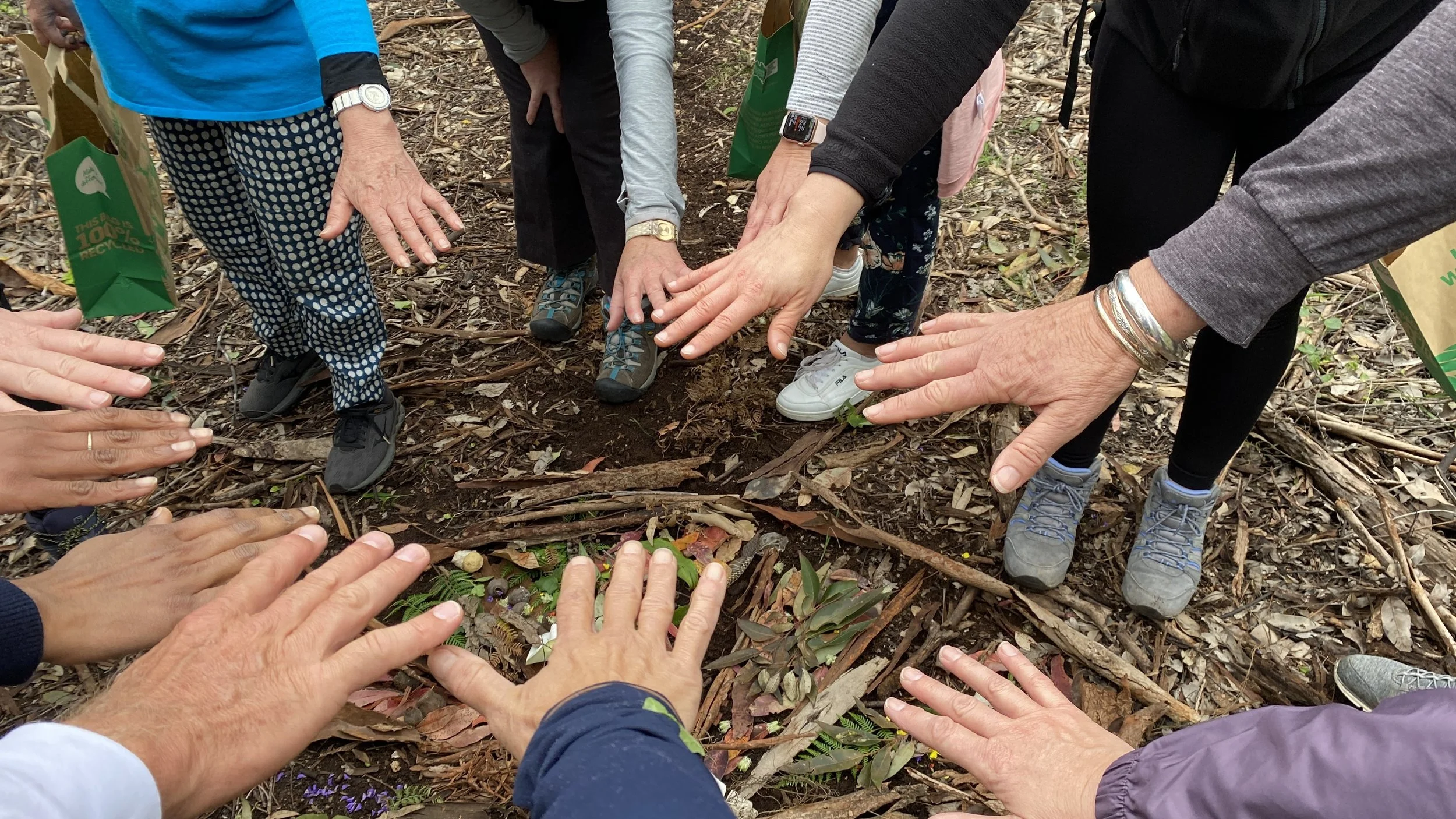
- Taking learning outdoors where students can interact with their environment
- Incorporating finger-tracing activities on digital devices or paper
- Allowing students to arrange their own learning spaces and manipulate physical materials
The key is integration.
The physical activity must connect meaningfully to the learning content. Research shows that random movement doesn't help; the gestures and actions need to embody the concept being taught. When a dancer works through a challenging movement problem or a student acts out a historical event, they're not just moving their bodies, they're thinking through their bodies.
Transforming the teacher-student relationship
Embodied learning also requires rethinking the traditional power dynamics in classrooms. When students leave their desks and engage in physical exploration, the teacher can no longer stand at the front maintaining complete authority.
Instead, they shift into roles as facilitators, guides, and fellow learners.
This shift can be unsettling for teachers accustomed to controlling every aspect of the learning environment. But it opens up new possibilities: students can develop autonomy, creativity, and genuine ownership of their learning.
Rather than passively receiving information, they actively construct understanding through experimentation and discovery.
The goal isn't chaos or complete freedom without structure. Rather, it's about creating conditions where students can explore, experiment, and learn from both successes and failures, with the teacher providing support, guidance, and scaffolding as needed.
Addressing the sceptics
Some educators worry that movement-based learning is just edutainment—fun but lacking substance. Others fear it will distract students or take time away from "real" content coverage. These concerns are understandable but misplaced.
The research is unambiguous: properly implemented embodied learning doesn't replace cognitive rigor, it enhances it.
Students aren't moving instead of thinking; they're moving to think better. The physical engagement creates cognitive scaffolding that supports deeper understanding.
However, there is a caveat.
More movement isn't always better.
Overly complex physical tasks can overload students' cognitive capacity, leaving less room for actual learning. The sweet spot is meaningful bodily engagement that supports, not overshadows, the learning objectives.
The hidden crisis we're ignoring
Here's an uncomfortable truth: today's students are more disconnected from their bodies than any previous generation. Many live in virtual worlds, communicate through screens, and spend unprecedented hours sitting still.
Many struggle to recognise non-verbal cues, express themselves physically, or feel comfortable moving in front of peers.
One educator described watching her students' initial discomfort with movement-based learning dissolve over a semester. What started as giggles and reluctance transformed into confidence and authentic self-expression. Students discovered what she called their "authentic movement voice" and, in the process, became more engaged learners overall.
By ignoring the body in education, we're not just missing a learning opportunity, we're reinforcing a harmful disconnect between students and their physical selves. We're training them to see themselves as disembodied brains, separate from the sensory, emotional, and physical experiences that make us fully human.
The path forward
Implementing embodied learning doesn't mean abandoning everything we're already doing. It means enriching our pedagogy with an evidence-based understanding of how humans learn. We can start small:
1. Observe where students already use gesture naturally when explaining concepts
2. Identify one unit where physical enactment could deepen understanding
3. Involve students in creating meaningful movements connected to content
4. Take learning outside when possible—connect lessons to the local environment
5. Reflect on the outcomes and adjust
The traditional model of education might have worked for a different era. But we now understand that the mind and body aren't separate systems; they're deeply integrated.
The 4E framework gives us the scientific foundation to transform our teaching in ways that honour this integration.
Embodied learning isn't a gimmick or a fad. It's a fundamental rethinking of how humans learn, grounded in decades of cognitive science research. It represents a return to something we know intuitively: that we learn best when we engage our whole selves, body, mind, emotions, and spirit, in the process of discovery.
It’s not about whether we can afford to incorporate embodied learning into our pedagogy. It's whether we can afford not to. In an era of unprecedented disconnection from our bodies, from nature, from each other, embodied learning offers a path toward reintegration and wholeness.
References:
Bertin-Renoux, A. 2024. Embodied and Enactive Creativity: Moving Beyond the Mind-Body Dichotomy in School Education. The Journal of Creative Behaviour, Vol 59, 1, e651. https://doi.org/10.1002/jocb.651
Dix, M. 2016. The Cognitive Spectrum of Transformative Learning. Journal of Transformative Education, Vol 14(2) 139 – 162 https://doi.org/10.1177/1541344615621951
Dunne, G. 2025. Rethinking ‘Thinking Skills’ in 21st-Century Education: Combining Conceptual Clarity with a Novel 4E Cognitive Framework. Studies in Philosophy and Education Vol 44, 493–511. https://doi.org/10.1007/s11217-025-09997-0
https://rdcu.be/e1O3F
Kiefer, M Trumpp, N.M. 2012. Embodiment Theory and Education: The Foundations for Cognition in Perception and Action. Trends in Neuroscience and Education. Vol 1 (1) 15-20.
https://doi.org/10.1016/j.tine.2012.07.002