Creativity Takes Risks
“We have to continually be jumping off cliffs and developing our wings on the way down.”
Kurt Vonnegut
If you’ve been following Edgewalkers over the last few years you might know that I first travelled to the Tavan Bogd National Park in 2015.
In 2017, a year after starting Edgewalkers, I scoped this spectacular remote wilderness and this particular 9-day hike to see if it might be possible to run a hike there.
In 2018 I ran it with only 3 people.
In 2019 9 amazing women joined us.
In 2022, after COVID, only 5 people came.
In 2023, to my delight we walked with 24 people.
Organising, marketing, selling and running walking adventures in remote, international locations is not something I’d ever done before.
It was a risk.
It was a risk that I had to hold in uncertainty for years.
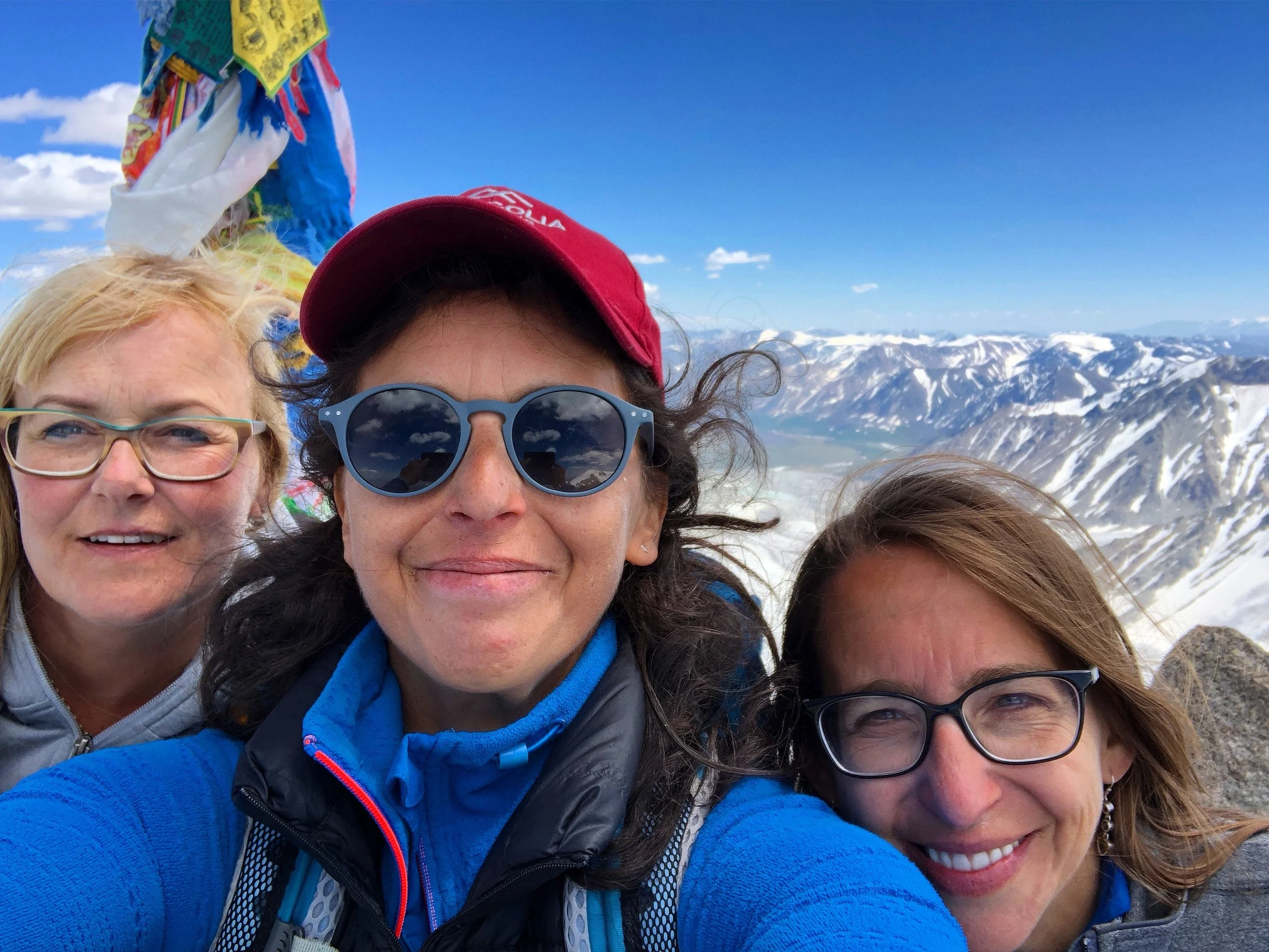
The picture above was taken in 2018 on the Malchin Peak summit during the first Mongolia Walking Adventure. Only Lot (Netherlands), Lisa (US) & Alistair (Scotland - he didn’t try to summit) signed up and even though I knew with only three people the event was not going to make any money, I invested in it, to see if it would work.
The risk was worth it.
Mongolia is an established and viable product that sells well and has been fine-tuned over the years.
Nothing is ever certain, but one thing is almost always true: creating something new or trying out innovative ways to solve problems usually takes some risk.
We’ve heard it before.
Extraordinary creators, innovators, entrepreneurs are always saying it.
Like some grey, doomsday cloud bearing bad news and shitty weather: “creativity & innovation take risk.”
I know you don’t want to hear it.
And that’s OK.
You don’t have to.
But if you’re committed to bringing something new and authentic into existence; into your life, there’s probably going to be a moment when you’ll be required to take a chance.
Why?
Risk is often what helps us unearth opportunities that others may not see: like the opportunity Mongolia offered for an exciting and unparalleled wilderness experience and the extraordinary walking route we take through the Tavan Bogd National Park.
Risk helps us to learn and master new skills: in 2017 I didn’t know how to run Facebook ads, I didn’t know what an ideal client avatar was, what commissionable meant, what it meant for people to hike at altitude, how to perform wilderness first aid, how to market international destinations, what needs to be included in a good itinerary, how to liaise with local international partners with different cultural attitudes and habits.
I have gained all these skills since then.Risk helps us reach new destinations and attain new goals.
I feel confident about my ability to put together itineraries and create an incredible adventure in other destinations. Knowing the risk can also help reduce a known risk in the future.
If I had not taken the risk - or risks - none of it would have happened.
Full stop.
Risks create the kind of friction that ignites problem solving thinking and creative ideas.

be willing to take risks
However, not all risk is equal.
The ‘risk’ in creating something new is not about health nor is it safety related; it’s not about gambling all your finances on dodgy stock.
It’s an intellectual or social risk.
It’s risk that requires you to face the possibility of failing because you’re trying out a new idea.
The level of risk taking does not have to be high, but there has to be a willingness to sometimes take risks; to be open to them and understand and accept the inevitable and crucial role of mistakes and ‘failing’ in the creation of something new.
Beghetto, R. A., Karwowski, M., & Reiter-Palmon, R. (2021). Intellectual risk taking: A moderating link between creative confidence and creative behavior? Psychology of Aesthetics, Creativity, and the Arts, 15(4), 637–644.